

Booking this quarter
Assalamu alaikum — I'm Saahil Rehman.I train people to stand back up — and keep standing.
Corporate training, sales and leadership development, and career coaching for students, professionals and whole organisations — delivered in the room, in the language your team actually thinks in.
- Every session built for your room
- Bangla or English, your choice
- Follow-up after the session, not just on the day
- Leadership
- Sales & negotiation
- Public speaking
- Team building
- Career planning
- Emotional intelligence
- Time management
- Personal branding
- Mindset
- Workplace etiquette
- Crisis management
- Peak performance
- Years training
- 22+
- Sessions delivered
- 5,000+
- Learners reached
- 100,000+
- Languages spoken
- 6
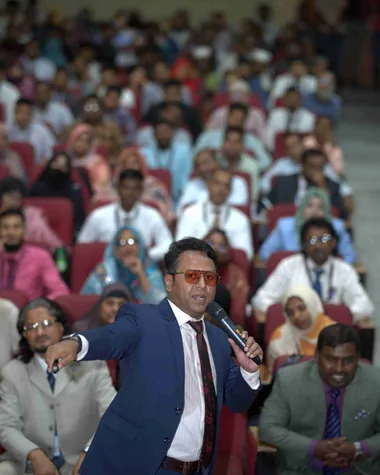
About
I am a Corporate Trainer & Life-Career Coach
I train corporate teams, coach people through career and money decisions, and speak to halls full of students — and have done since 2004. Most of what I teach was learned the way the room learns it: by getting it wrong in front of people first.
I started training in 2004 and never moved to the back of the room. Everything I teach has been tested on an audience that could walk out — which is a stricter editor than any slide deck.
Signature programs
The programs I am asked back for
Each one is a full program rather than a talk: an outline, the room it suits, how long it runs, and what a team can actually do differently on the Monday after.
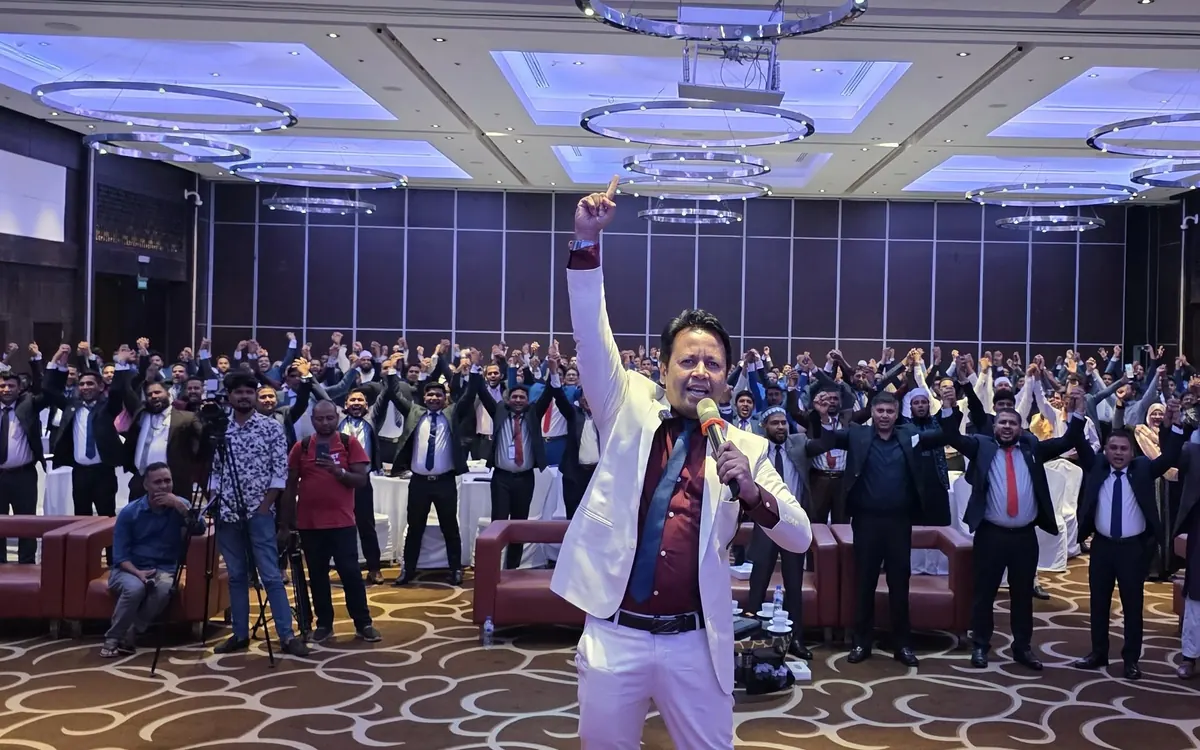
Open seminar · MindsetOne day, or an evening
Empowering Success Minds
The flagship seminar: what actually separates the people who restart after a setback from the people who do not — run for halls of several hundred at a time.
- Mindset development
- Resilience
- Deep focus
- Success strategies
In-house · Sales teamsTwo days
The Sales Floor
Two days with a sales team on their own product: the opening call, the eight objections they really get, and closing without apologising for the price.
- Sales training
- Negotiation
- Objection handling
- Client relationships

In-house · New managersTwo half-days
First-Time Leaders
For people promoted because they were good at the job, who have since found that managing it is a different job nobody trained them for.
- Leadership development
- Team building
- Feedback
- Delegation
In the room
What the sessions actually look like
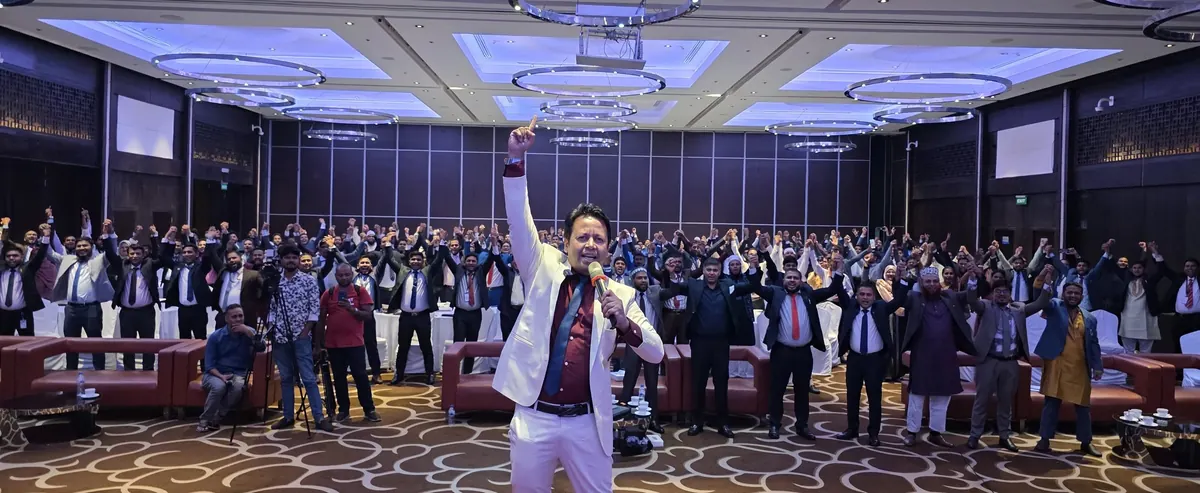
Photographs from real sessions rather than stock. The numbers above describe these rooms; this is them.


On YouTube
Watch a few minutes first
The quickest way to know whether a trainer suits your room is to watch him work. New videos on leadership, mindset and career go up on the channel regularly.
Thumbnails are served from this site. YouTube is only contacted when you press play.
Saahil Rehman on YouTube
Leadership, mindset, career and money — in Bangla, in short episodes.
Training
What I am brought in to fix
Eight areas I work in often enough to build a session around your situation rather than hand you a standard deck. If your problem sits next to one of these rather than inside it, ask anyway.
Leadership and team building
For the people who were promoted because they were good at the job, and have since discovered that managing it is a different job.
Sales, negotiation and objection handling
The part of selling that is not enthusiasm: opening a conversation with a stranger, hearing “no” without folding, and closing without apologising for the price.
Communication and public speaking
Presenting to a board, briefing a floor, or saying the difficult thing to a colleague — the three situations where careers stall for reasons that have nothing to do with competence.
Career coaching and personal branding
One to one, or a hall full of final-year students. Where you are going, what is actually in the way, and how to be visible to the people who decide.
Financial planning and investment literacy
Training, not advice: how saving, protection and investing actually work, so a team can make its own decisions instead of taking the first one offered to them.
Entrepreneurship and business strategy
For the people in the room already building something of their own — and for the organisations that would rather those people built it inside the company.
Mindset, focus and emotional resilience
How many times you got up matters more than how many times you fell. This is the session that turns that from a nice sentence into a practice.
Productivity, professionalism and crisis readiness
The unglamorous half of performance: how the day is spent, how the workplace behaves, and what the team does in the hour a plan falls apart.
How it works
Four steps, no surprises
The same sequence for a two-hour session and a six-month program. You always know which step we are on and what it costs.
- 1
Tell me about the room
A call or a long message. Who will be sitting there, what is not working now, and what you would want them doing differently a month later. Not a topic list — the topic is usually the symptom.
- 2
An outline and a fixed fee
A written session outline: what is covered, in what order, how long it runs, what the room needs, and what it costs. You approve it before anything is prepared.
- 3
Run it in the room
The session itself, in Bangla or English. Participants work, practise and present — a day where the trainer did all the talking is a day nobody remembers by Friday.
- 4
Follow up afterwards
Materials, a short written summary of what the room committed to, and a check-in later. A session with no follow-up is an event; with one it is training.
Expertise
The full range
Grouped the way an HR lead asks for them rather than the way a syllabus lists them. Every line below is something I have run as a full session, not a bullet on a brochure.
Communication
- Communication skills
- Interpersonal skills
- Public speaking
- Presentation skills
Sales & persuasion
- Sales training
- Negotiation
- Objection handling
- Client relationships
Leadership & organisation
- Leadership development
- Team building
- Organisational development
- Culture building
Performance & focus
- Time management
- Productivity
- Mindset development
- Deep focus
- Peak performance
Resilience & judgement
- Emotional intelligence
- Stress management
- Crisis management
- Problem solving
Career & professionalism
- Career development
- Personal branding
- Professionalism
- Workplace etiquette
- Success strategies
How I teach
Four rules I do not bend
These are settled before a booking is confirmed, because they are what separates a session people remember from a day people sat through.
Built for your room
The outline is written after the briefing call, using your examples. A deck that arrives before the conversation was written for somebody else.
They practise, I do not lecture
Most of the clock belongs to the participants. Skills that are only described are forgotten; skills that are attempted in front of colleagues are not.
In the language the room thinks in
Bangla, English, or moving between them as the room does. Nobody learns a new skill and a second language at the same time.
Something to do on Monday
Every session ends with each person writing down one specific thing they will change. Vague inspiration wears off by the time the room empties.
Questions
What organisers ask before booking
What does a session cost?
It depends on the length, the size of the group and how much preparation the brief needs, so I quote a fixed fee after the briefing call rather than publishing a rate card that would be wrong for you. A half-day for a small team and a full-day seminar for a hall of three hundred are different pieces of work. Whatever the figure is, it comes in writing alongside the outline, and it does not change unless you change the brief.
Do you train in Bangla or English?
Either, or both in the same room — whichever the participants actually think in. This is not a small detail: somebody spending half their attention translating is somebody learning half as much. I also speak Urdu, Spanish, French and Indonesian, which occasionally matters for a mixed international group. Tell me what the room speaks and the materials are prepared to match.
Is the session customised, or is it a standard course?
The outline is written after the briefing call, using your examples. A deck that arrives before the conversation was written for somebody else. For a sales team that means collecting the objections your customers actually raise — from the floor, not from the manager — and building the day around those. For a leadership team it means running your own recent crisis again in the room.
How many people can attend?
It depends on the format. Skills that have to be practised — presenting, negotiating, handling an objection — cap out at about thirty, because past that nobody gets to attempt anything twice. Seminar formats built around a talk plus paired exercises work for several hundred. If your number is between the two, say so and we will pick the format that fits it rather than squeezing the room into the wrong one.
Do you travel for sessions?
Yes — sessions run across Bangladesh, Dhaka included, and travel and accommodation are quoted separately and plainly rather than folded invisibly into the fee. For anywhere that needs an overnight stay, tell me early: the date is easier to protect than to move later.
Can it be run online?
Yes, with one change: online sessions run shorter and in more parts. A full day that works in a room does not work on a screen — attention goes long before the material does. Two or three shorter sessions across a fortnight keep the practice and add something a single day cannot, which is a week in between for people to try it on a real team.
What happens after the session?
You get the materials and a short written summary of what the room committed to — not a transcript, but the specific changes people named, with who named them. Then a check-in later to see what actually held. A session with no follow-up is an event; a session with one is training, and the difference shows up about a month later.
How do we know it worked?
Not by the feedback form filled in while people are still in the room — that measures the day, not the training. The honest test is a month later: can a participant name one specific thing they now do differently, and can their manager see it? That is why every session ends with each person writing a dated commitment, and why the follow-up checks the list rather than the mood.